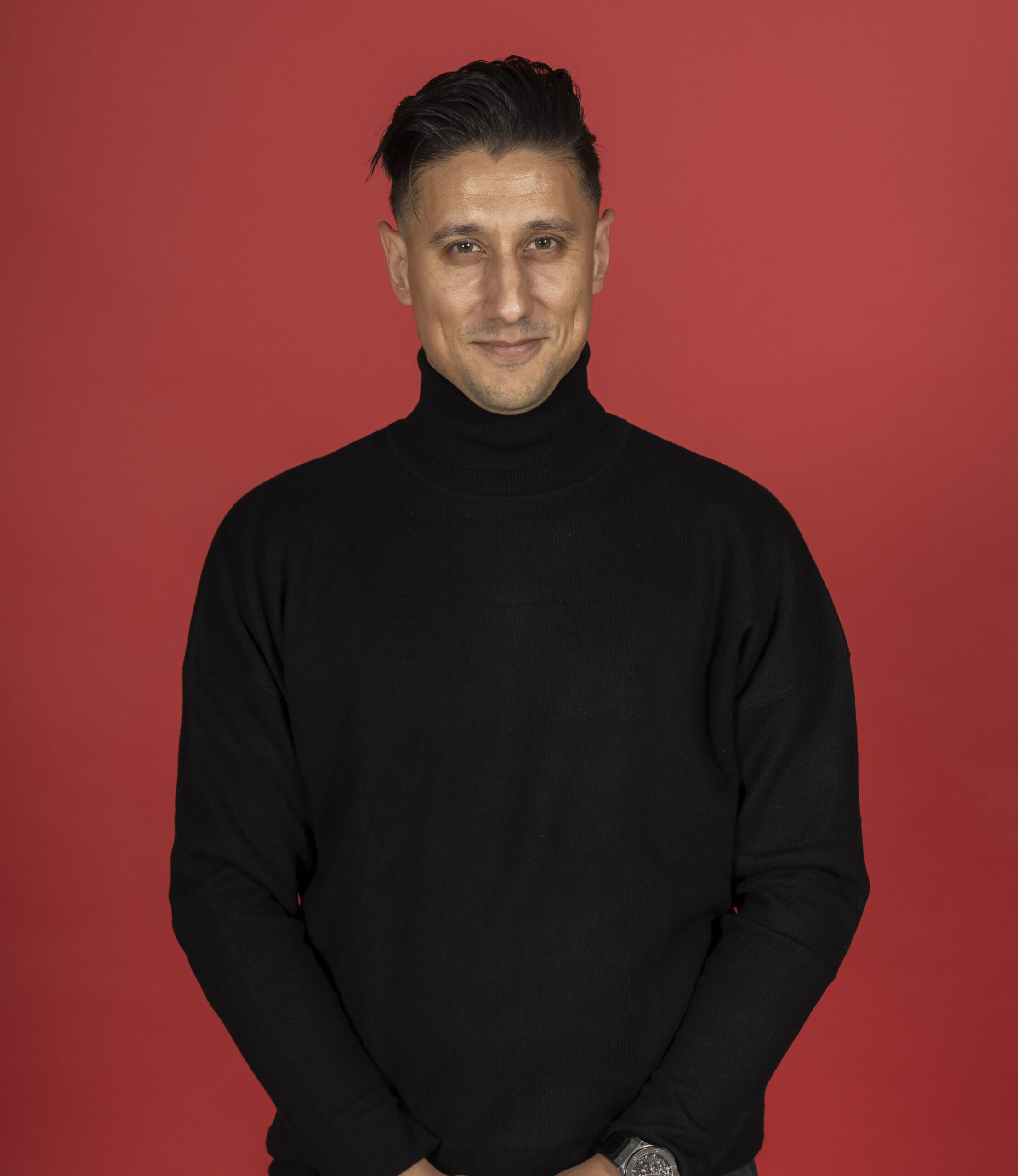
From idolising Francesco Totti to embracing the mindset of Zlatan Ibrahimović, Mihail Alexandrov reflects on mentality, leadership and his vision to transform Bulgarian football from within.
Mihail Alexandrov is a former professional footballer and five-time Bulgarian national champion whose career has taken him across leagues in Europe. Inspired early on by the creativity of Francesco Totti and later by the confidence and presence of Zlatan Ibrahimović, he built his success on mental strength as much as technical ability.
Now transitioning into football leadership, he serves as Technical Director at CSKA Sofia, the club where his journey began. With a strong belief in long-term vision, infrastructure development and data-driven decision-making, Alexandrov is focused on modernising Bulgarian football and creating sustainable success beyond the pitch.
Who were your biggest footballing influences or role models growing up?
When I was a kid, I had one idol. I clearly remember my room covered in newspaper cuttings of Francesco Totti. He was my favourite player, the captain of Roma, the Prince of Rome.
There was something different about him. A lot of people around me were talking about Zinedine Zidane or Ronaldo Nazário, but I saw something unique in Totti. The way he moved, his one-touch play, his vision and the passion he played with. It was everything I wanted to have as a player.
From day one, Francesco Totti was my biggest idol.
As I grew older and became a professional footballer, I found another influence in Zlatan Ibrahimović. Not just because of what he did on the pitch, but because of his presence off it.
The way he thinks, the self-confidence he shows, you can feel his energy when he speaks. When he says he is the best, he truly believes it. That mindset pushed me to build stronger self-confidence in my own career.
You were a five-time Bulgarian national champion between 2011 and 2015. How did you prepare mentally and physically for big games?
I’ve always believed that the physical side of football is the easy part. Not just in football, but in any sport.
The real difference between average players, good players and great players is the mental side. That is the key to success.
Talent is only a small piece. We’ve all seen incredibly talented young players who never make it professionally. Most of the time, it’s because they aren’t mentally ready.
For me, mentality is the foundation of a top player.
You competed across Europe. What was your favourite stadium to play in and why?
I’m a huge Real Madrid fan, so it’s probably no surprise that my favourite stadium is the Santiago Bernabéu.
As a kid, I always dreamed of playing for Real Madrid. For one reason or another, that didn’t happen, but I did play against them a couple of times. So I can still count that dream as complete.
I played in the stadium, not for Real Madrid but against them, and for me that still means a lot.
Was it challenging adapting to new countries and leagues?
I never had a problem adapting. I speak six languages, so it’s always been easy for me to communicate in different environments from day one.
I’m someone who tries to connect people rather than separate them. Whenever there’s a problem, I’m usually the first to try and solve it.
How did you find the transition into life after football?
I truly believe that sport gives you all the tools you need to become a leader.
It teaches leadership, teamwork and decision-making. It builds discipline, waking up early, following schedules and doing the right things consistently.
Because of that, I think sport is one of the best preparations for a second career.
What motivated you to join the UEFA MIP programme?
I’ve always wanted to be different, not just as a player, but now in my second career as well.
I believe you need something extra to stand out, something that sets you apart from others.
That’s why I reached out to Stiliyan Petrov, who is an MIP alumnus. He showed me the path and played a key role in my decision. Without him, I probably wouldn’t have taken this step.
At that time, he was the only Bulgarian to complete the programme. Now, I’m proud to say there are two of us, and hopefully more will follow in the future, because it’s a very demanding but valuable experience.
What is one leadership lesson from the programme that you now use in your role?
To be honest, I use almost everything I learned on the MIP programme in one way or another.
I try to lead by example and show people the importance of doing things the right way. The reality is that football in Bulgaria is still behind in some areas, and we need to catch up quickly.
We have a lot to improve, and we need to move faster than others to close that gap.
For me, leadership is central to that. It influences data collection, decision-making and how we build for the future.
Returning to CSKA Sofia as Technical Director must have been special. How does it feel?
I could probably give ten different answers from ten different perspectives.
This is the club where I started my football career when I was six years old, so coming back for my second career means a lot.
There’s a sentimental side to it, but at the same time I feel even more motivated to succeed. I want to give something back to the club that gave me everything.
Every day, I feel the responsibility to give more than 100 percent.
What does success look like for you in this role beyond winning matches?
Many CSKA fans have been waiting to see former players step into leadership roles and take responsibility.
They want someone who understands the club and knows what they are doing. Not necessarily the loudest person in the room, but the smartest.
I hope I can be that person for them.
What is one key decision you’ve made that has changed the direction of the club?
My background could have led me towards coaching or a traditional sporting director role, but I always wanted to work in the administration side of football and be part of the decision-making process.
When I joined the club and spoke with the owner, it was clear to me that the biggest change we needed to make was in infrastructure.
In Bulgaria, many owners focus heavily on transfers and short-term results, but not enough attention is given to long-term development.
For me, infrastructure is everything. That’s where sustainable success is built.
It takes time, and not everyone sees the progress immediately, but in two or three years we will have facilities that Bulgarian football has never seen before. That’s something I’m very proud of.
What advice would you give to someone aspiring to become a Technical Director?
The most important thing is to stop thinking like a player and start thinking like a director.
As a player, you focus on the pitch, the training environment and the changing room. But behind the scenes, there is so much more, organisation, budgeting and planning.
As a player, you don’t see how many people are involved or how everything works.
That transition is the biggest challenge. But if you approach it in the right way, everything comes together.