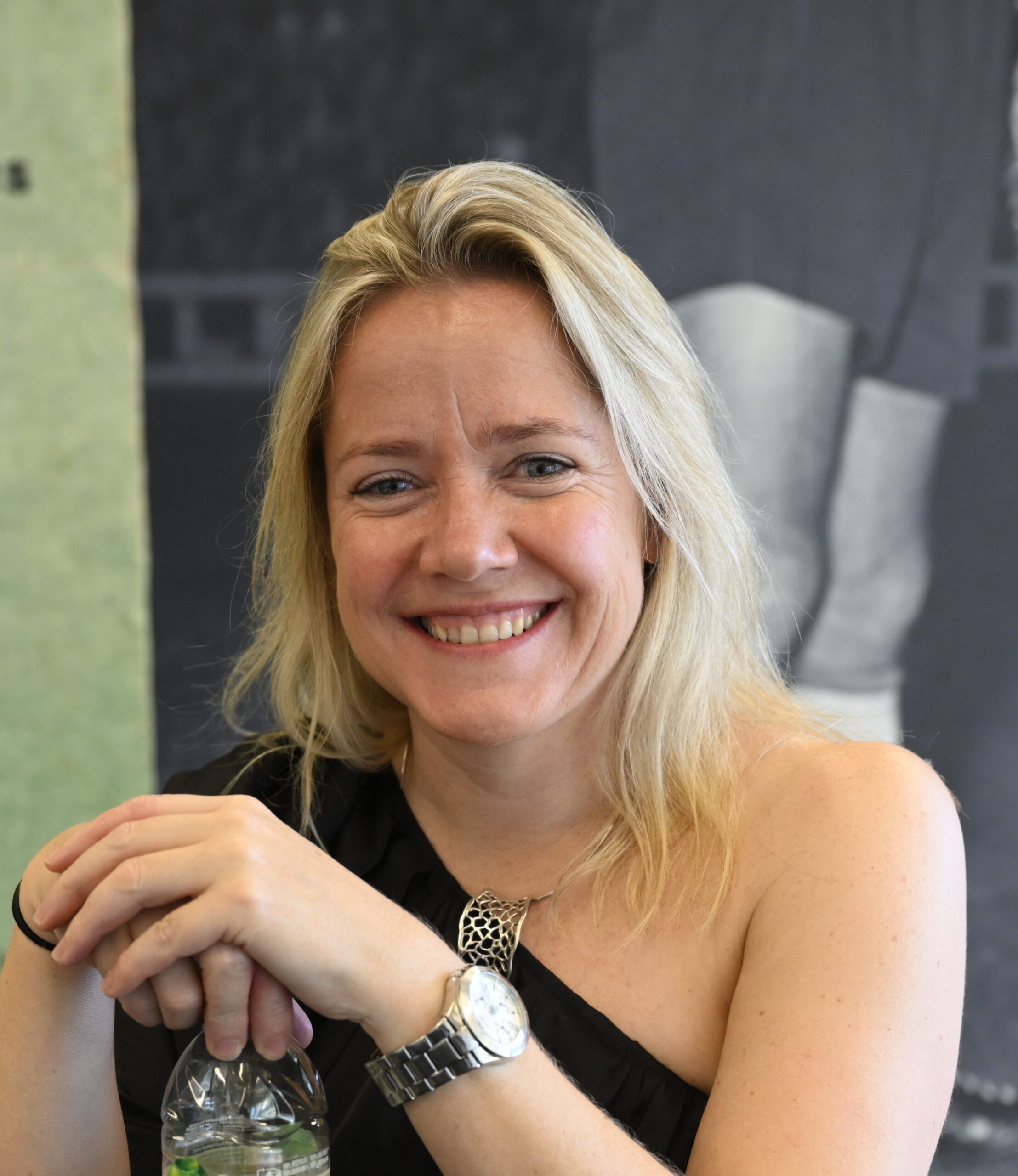
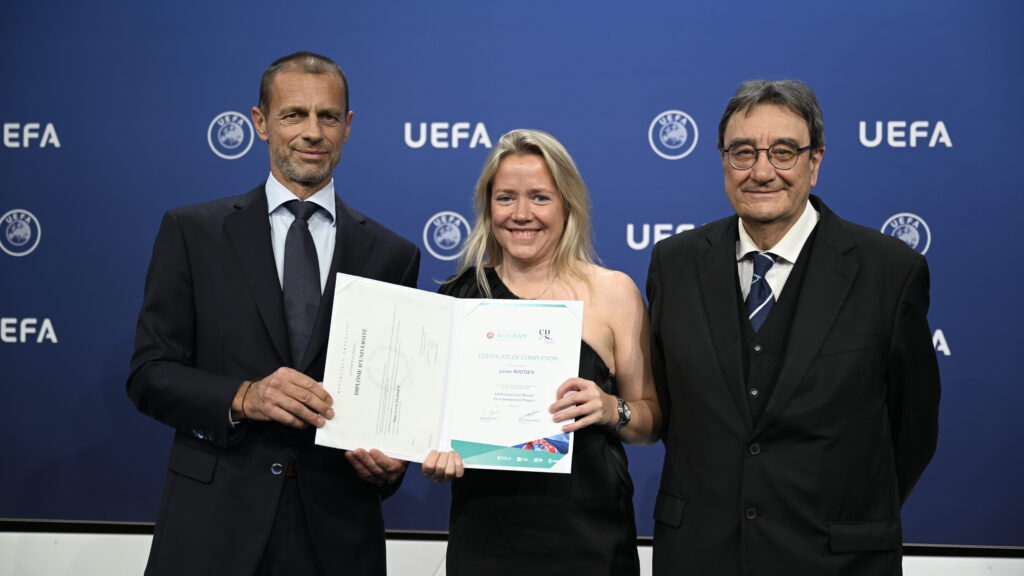
After a successful domestic and international career, Janne Madsen has remained a vital part of the Danish women’s national team, now working behind the scenes as kit manager. Her journey has taken her from celebrated player to respected leader, shaped by her studies on UEFA’s Executive Master for International Players (MIP) course and strengthened through personal challenges, including her recent battle with breast cancer.
In this candid conversation, Janne reflects on the joy of representing her country, the lessons that shaped her leadership, and her hopes for the continued growth of women’s football, both in Denmark and around the world.
61 caps for Denmark. What did it feel like to receive your first call-up to the national team?
It was a dream come true, a childhood dream. For everyone who plays sport, your goal is to represent your country, and it was the same for me. It was overwhelming and I was beyond excited. In my first game I scored my first goal, and I celebrated like it was a World Cup final!
Looking back on your career, is there a particular lesson or piece of advice from a coach that has shaped the way you lead others today?
I don’t think it’s so much a piece of advice. It’s more about the way they were as leaders. For me, a good leader is one who’s really good at communicating, good at listening, and most importantly, someone who shows empathy.
What qualities did you develop or strengthen during the UEFA MIP course that support you in your role today?
When I applied for the MIP course, I thought I knew everything about football. I soon realised that I knew nothing! It was an eye-opener to see how complex it is to be a leader in football. I learned lots of tools to use when you become a leader.
Another thing I liked was meeting people from all over the world. One of the biggest lessons was accepting that people have different opinions, and that we all lead and communicate in different ways.
The latest MIP cohort have graduated this month. What advice would you give to those stepping into leadership roles in football?
Always stay curious and always be open to learning something new. I think a good leader is someone who always adapts to new things; it helps people grow. Also, don’t be afraid to ask questions. You’re not a leader on your own. It’s very important to ask for help or advice if you need it. I also think it’s important to be bad at certain things, because that’s how you learn in life.
Over the last year, you’ve faced an incredibly tough personal challenge, battling breast cancer. What did you learn about yourself during that journey?
It just changes your life completely. It definitely puts your life into perspective. I would say the worst part was the week I had to wait for the results, because I knew I had waited way too long before going to see my doctor. You never know if it’s coming back. During that time, I felt really safe in the Danish health system, but it’s really weird when you’re done. You just walk out. You don’t know if it’s still in your body. That’s been tough, and that’s where I’m at right now.
You’re currently the kit manager for the Danish women’s team. Can you tell us a bit about what that role involves and how you got into it?
I stopped playing professional football in 2012, which felt really weird because it was my greatest passion. In 2013, a good friend of mine who was the youth national team coach asked if I wanted to be the kit manager for the youth team. Then, in 2017, the kit manager for the senior national team stopped, and they asked if I wanted to take over. I’ve been in that role ever since.
My job is to take care of all the clothes and equipment so that the players and staff have everything they need for training and matches.
Was it a conscious decision to stay involved in women’s football after your playing career?
That’s what I’m focusing on at the moment. I’ve always wanted to make progress in women’s football and be an advocate for improving it. It doesn’t even have to be in Denmark; I’m also looking at roles in other countries.
In your view, what are the biggest challenges facing women in football today?
Even though the women’s game has progressed a lot since 2019, I think investment and visibility are still the biggest challenges. People need to know the players before they come to the stadium, and clubs need big sponsors who want to invest in the team.
We also need more women in leadership roles. It’s different when it’s only men in the boardroom who keep going down the same path. It would be very interesting to have more women involved to bring another point of view. The problem is that most of the time there’s only one woman and ten men, and that makes it difficult to get your view across.