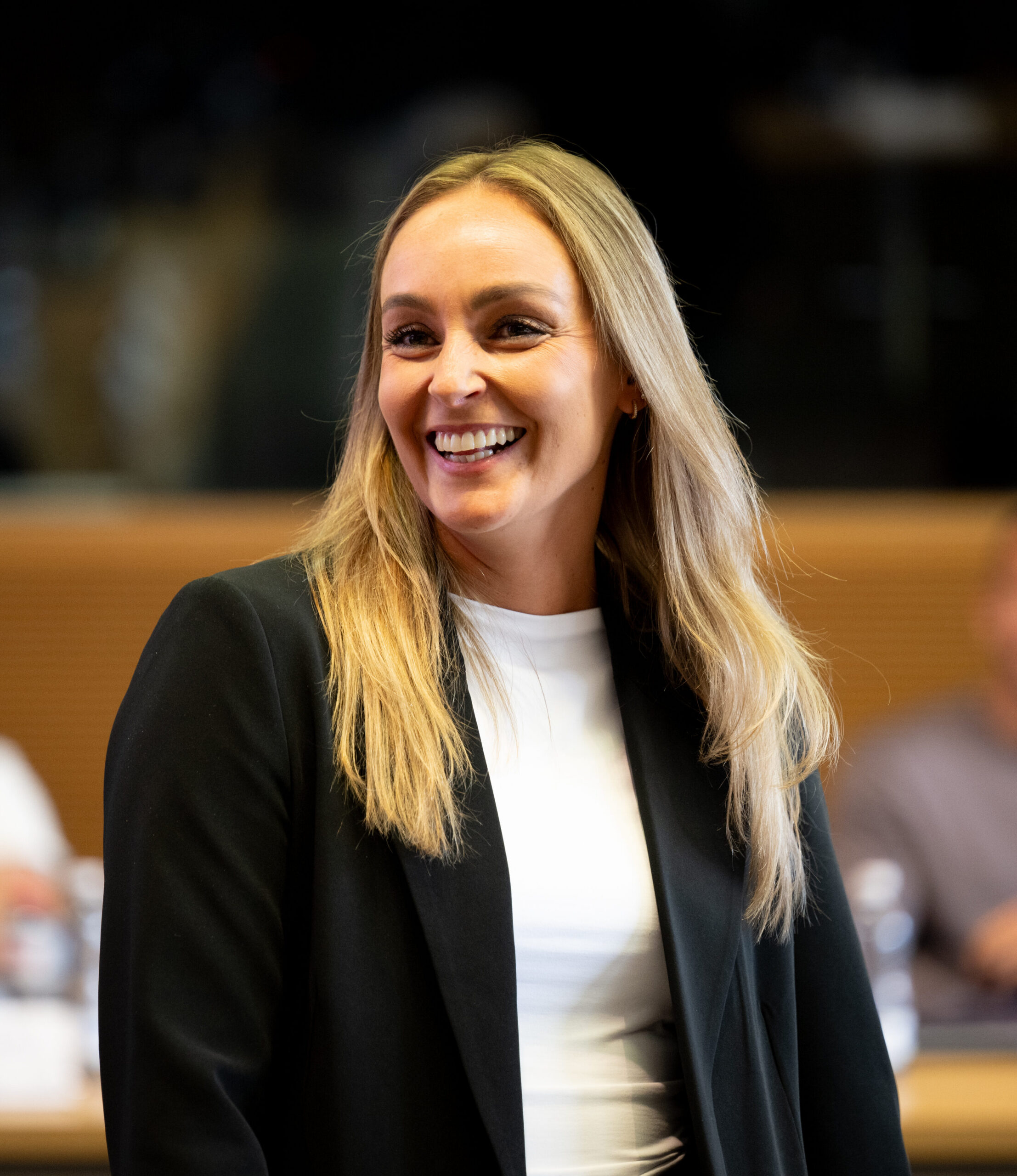
Sif Atladóttir is a respected former Icelandic international footballer who earned 90 caps for her
country across the span of her professional career, and multiple domestic titles along the way.
After retiring from playing, she transitioned into leadership off the pitch and now serves as the
General Manager of the Icelandic Players’ Association, balancing her role with studies as a
member of the recently graduated cohort of the Master for International Players programme.
Known for her commitment to player welfare and her advocacy on issues such as maternity
support and equality in the game, we delve into Sif’s unique perspective on how women in
football are perceived and the work still needed to create a more inclusive sport.
How did your journey in football begin? What first drew you to the game growing up in Iceland?
I come from a very big football family. My dad was a professional footballer himself and all three
of my siblings play as well. I actually came into football a little bit late. I didn’t start practising
until I was 15, as I did track and field before.
I was often at my dad’s football games and I loved the camaraderie and team environment.
How did the women’s game evolve during your playing career?
When I started, I didn’t even know we had a women’s national team. At that stage, it was more
about having fun and not being overly competitive. My thought was always, “My dad did it, so
I’ll play with the boys — no problem.”
The first few years were really tough, but when I reached around twenty or twenty-one, I
noticed some of the girls moving to international leagues. That was the first time I saw an
opportunity and a real adventure.
I noticed a major shift in 2017 when the Icelandic national team qualified for the Euros for the
third time. I had acquaintances walking past a football field and hearing young boys saying, “I’m
Sif,” because they were doing a long throw-in, which is what I was known for. That’s when I
realised I was in the public eye and something exciting was happening.
From the start of my career in 2010 to the end in 2022, I can’t believe how much the game
progressed. The explosion of the sport has been amazing. It’s such a privilege to have been part
of that.
What motivated you to apply for the UEFA MIP course?
I actually found an application for the previous cohort two years earlier and didn’t end up
applying, but it stuck in the back of my mind. I always knew I wanted to stay within football, but
in Iceland the roles are quite limited to coaching.
I thought it would be an amazing opportunity to get into — not only from an academic
standpoint, but as an adventure too. I also had the opportunity to apply for a scholarship. After
talking it through with my husband, we decided it was an opportunity I should take.
You wrote your thesis on “Why are dedicated leadership roles important for advancing women’s
football?” Can you explain why this topic matters to you?
It hits really close to home for me. Growing up as a female player, you’re expected to roll with
the punches. Playing from the age of fifteen to thirty-nine gave me experience across so many
different areas of women’s football.
I’ve had so many conversations inside football that I don’t agree with, especially around the
women’s game. For me, it’s important to recognise that women’s football is different from
men’s. We have fewer resources, but the people who work in women’s football are incredibly
dedicated despite those limitations.
It’s also important to understand that women aren’t just small men. We have different
physiology, different mindsets and different needs.
Did you feel any vulnerability going back to study after years in elite sport?
It was different. I did my bachelor’s degree in Sweden while I was still playing and started my
master’s in a traditional academic setting.
Stepping into the MIP studies, I felt really vulnerable and out of place. Walking into a room with
people who had played in World Cups or Championship finals felt like a different ballgame.
Being part of a group that had accomplished so much, while coming from a small island in the
Atlantic, was intimidating but also humbling.
If you try new things, it’s always scary and difficult. Trying to educate yourself in something you
know so well as a player, then understanding how it works systematically on the other side, was
really interesting.
You are currently the General Manager of the Icelandic PFA. What kind of leader do you aspire
to be now that you’ve completed the MIP programme?
That’s an interesting question because it’s something we were often challenged on during the
course — figuring out who you are.
Throughout the course, I realised that I’m very empathetic. I try to put myself in other people’s
shoes and my values centre on putting people first. In football and in every industry, we’re
working with people who have lives outside of work. I want people to grow and become the
best version of themselves. If I can support them on that journey, that would make me really
happy.
What perspectives do former players bring that football administration often lacks?
I think we understand both sides really well. As a player, you understand what individuals and
groups need, and you understand the emotional side of the game.
That perspective helps in administration and leadership roles because when you step into a
boardroom, understanding players’ needs, how things should be organised, and the culture
around the game is really important.
What’s next for you now that you’ve completed the course? Are there any specific goals you’re
aiming for in the football world?
It’s still a bit blurry. Right now, I really want to support the players because sometimes, when we
step into new roles in football, we forget that we were once players ourselves.
Here in Iceland, we have a great youth system up to a certain point, but we still lack structure
and understanding around the players’ wider environment. The future is still a bit of a mystery,
but I’m looking forward to what it brings. Stepping into a broader leadership role in football
would be an amazing opportunity.
What do you think women’s football needs most right now — from the perspective of someone
who’s been both on the pitch and in the boardroom?
It’s a deep and complicated question. We often talk about finances, but I don’t actually think
that’s the biggest need. I think we need honesty.
It starts with being honest about how we feel about women’s football. If you’re working in an
organisation or club, you need to genuinely believe in it. If you don’t, that’s okay — but
acknowledging that helps everyone move forward more honestly. Only then can we build
something meaningful.