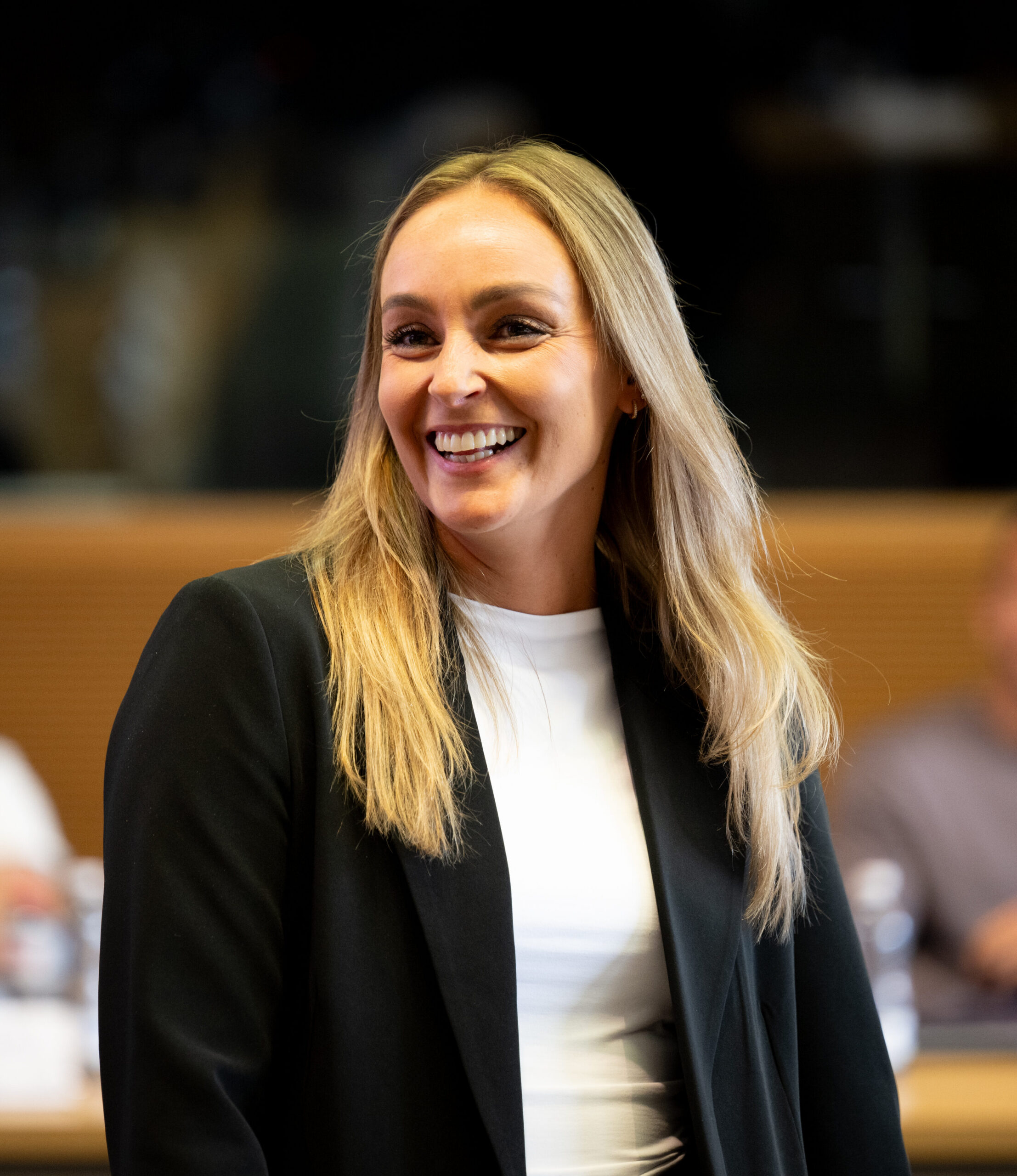
Isa Echeverri’s journey through football is as much about identity and resilience as it is about performance on the pitch. A former professional footballer and Colombian international, she built her career navigating the challenges that often come with representing South America in a sport still working towards true global equity.
Since stepping away from playing, Isa has continued to shape the game from a broader perspective. Through her participation in UEFA’s MIP programme, she is part of a new generation determined to influence the sport far beyond the field.
What first inspired you to pursue football growing up in Medellín?
My first football was a rock. A small rock my father and I would kick around because we didn’t have a ball. That is where it started.
What is interesting is that my family was never really into football. Nobody in my house was obsessed with the game. I think I was just born with it. Something in me recognised football before I could explain why.
I was always the only girl playing. I never questioned it. It never occurred to me I wasn’t supposed to be there. I just played. And my family supported whatever made me happy. That freedom was everything. It didn’t come from them being football people. It came from them being good people.
Looking back, that rock taught me something I still carry. You don’t need the perfect conditions to fall in love with something. You just need the thing itself.
What does it mean to you to wear the Colombia shirt, especially as women’s football grows in the country?
The biggest honour of my life. Simple as that.
I still remember the first time I put it on and looked at myself in the mirror. I could not believe it was real. What I felt in that moment is hard to put into words. It was so many things at once. Happiness. Responsibility. The weight of a country, of my family, of everything I had worked for. And this enormous sense of duty that I had never felt before.
It is a rare combination of emotions and once you feel it, you never forget it.
As women’s football grows in Colombia, that shirt means something new to every generation that wears it. What we built, what we fought for, what we refused to accept quietly — it is all in that shirt now. I hope the players who wear it next feel that and carry it forward.
You’ve been very vocal about inequalities in women’s football. What pushed you to speak out?
By 2019, I had played every major international tournament available to me, both with my club and with Colombia. I had lived the full experience of what it meant to be a professional footballer in Latin America. And I reached a point where I felt I had nothing left to lose and everything to gain by using my voice for something bigger than myself.
I was willing to put my career on the line, because I believed the cause was worth more than my comfort.
What I am most grateful for is that I did not do it alone. Melissa Ortiz and Natalia Gaitán were by my side. Without them, I genuinely do not think I would have taken that step. Finding those allies changed everything.
That experience taught me something I think about every single day. Players hold more power than they will ever realise. I did not understand the size of my platform until I chose to use it.
Now I think the most important conversation is about what is ahead of us. The opportunities in women’s football right now are enormous. My focus has shifted from pointing at what is broken to building what could be extraordinary. A game we would be proud to play in. An even playing field where everyone is welcomed and valued.
What still needs to improve for future generations of players?
The conversation has evolved. The media landscape has changed. But the vast majority of countries still lack infrastructure and women in real decision-making positions, and those two things are connected.
We need more women in leadership roles inside football. Not as a gesture. As a necessity. Because the game needs to be seen through women’s eyes to work properly for women. Copying men’s football is not the answer. I say this respectfully because there is a lot to learn from it, but we cannot just transplant a model and expect it to function.
Everything from research to staffing to facility design to how we structure the business model needs to be built through a women’s lens. When that happens, the game becomes better for the players and more sustainable as a business. Those two things are not in conflict. They actually need each other.
How did you find out about the MIP course and what was your experience like on it?
I was lost when I retired. Really lost. I had studied my entire career thinking that when the moment came I would be ready. And then the moment came and I was not ready at all.
I started looking online and found the MIP. My first reaction was uncertainty. I didn’t know if they would accept someone who wasn’t European. I remember sending an email to UEFA asking exactly that question, and at the same time texting Vero Boquete to ask about her experience and whether it was worth it.
It was worth it. More than I could have imagined.
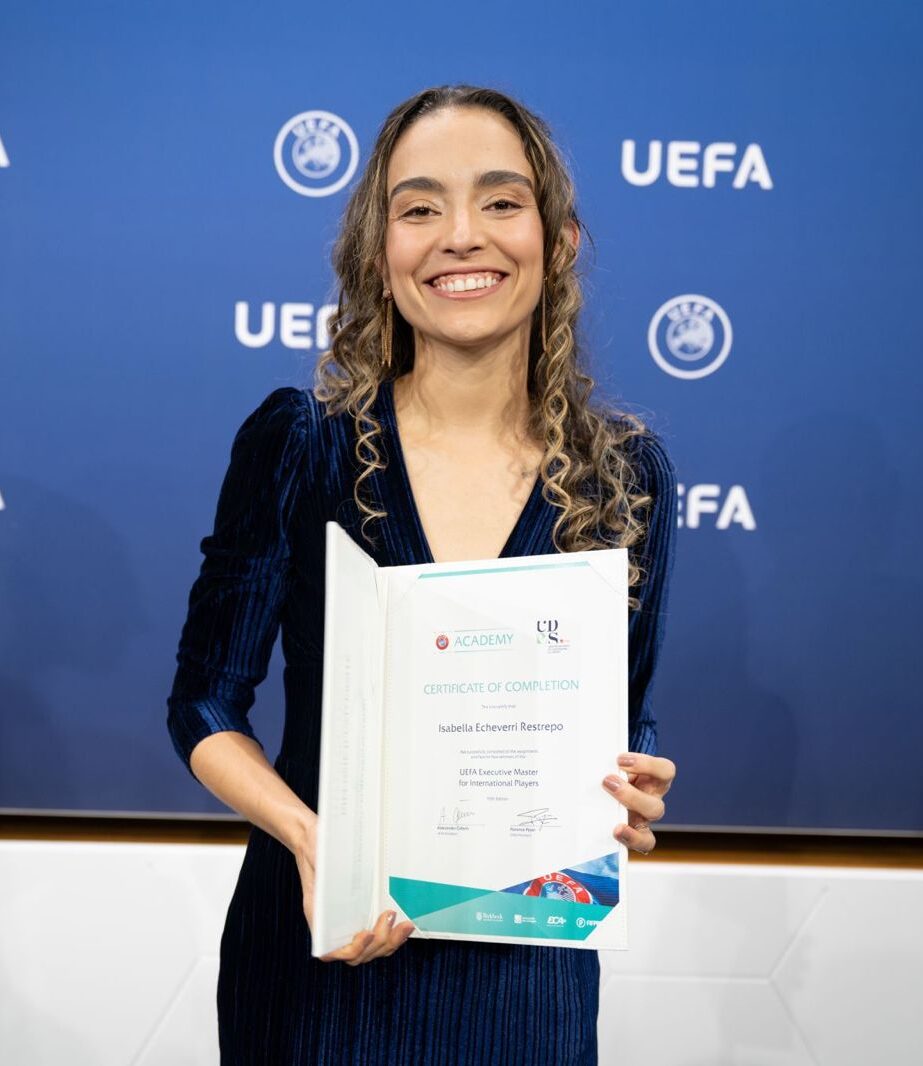
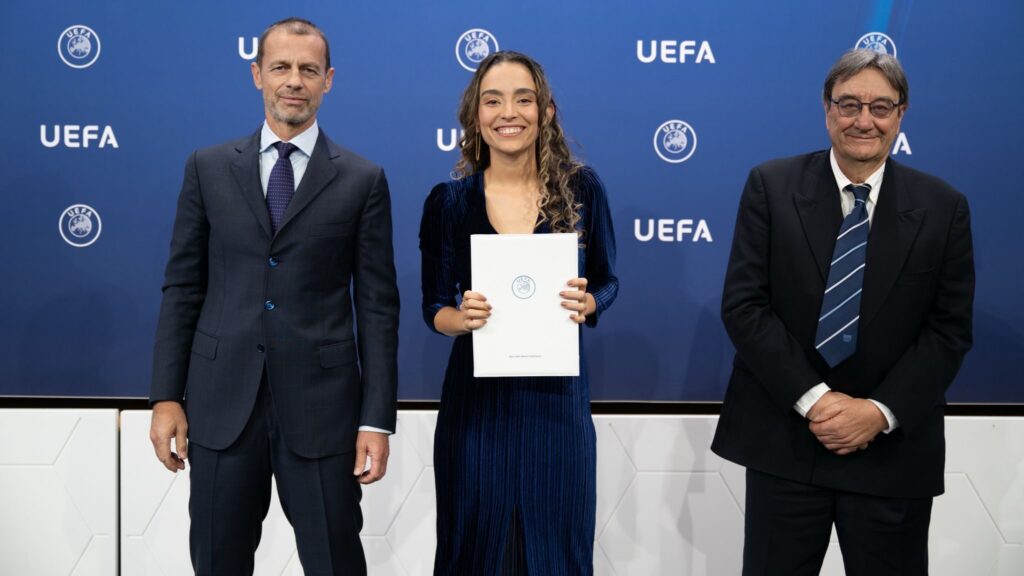
I am the first woman from South America to complete the course, and that is something I am genuinely proud of. Not for myself alone, but because I want to open that door for more Latina players who come after me.
What the MIP gave me was a room full of former players and one referee from all over the world. Different backgrounds. Different experiences. Completely different views of football and of life. We came together not knowing what would happen, and ended up having the time of our lives and building friendships that will last forever. The quality of the people you meet and learn from is something you cannot put a price on.
What advice would you give to South American players who want to take part in the MIP course?
Reach out. To UEFA. To former players who have done it. To me directly.
The biggest barrier is not eligibility. It is not knowing that it is possible. From the outside, you assume this is a European programme for European players. It is not. It is open to players from everywhere, and there are scholarship opportunities available too.
We as players need to be leading football. Not just playing it or commenting on it, but actually shaping it. That starts with education and it builds with the right network around you. The MIP gives you both. You just have to believe you belong in that room. You do.
What skills did you develop on the MIP course that have helped you succeed in broadcasting?
It helped me understand football as an industry, not just as a game.
When you play or watch football, it looks like ninety minutes. But there is an entire world operating behind those ninety minutes that most people never see. The logistics. The marketing. The communications. The history of clubs and federations. How managers build and protect their decision-making. The economics of transfers and contracts. The political relationships inside governing bodies.
That context is with me in every broadcast. It changes what I notice, what I ask, and what I am able to explain to the millions of people watching.
I will also say this. I’m not sure I’ll be a broadcaster for my entire life. What I am sure of is that when the moment comes and I step into a leadership position inside football, every skill and every relationship I built through the MIP will be there waiting for me. That is the real investment.